
(Prefer to listen? Tap here)
Stitching a Country Together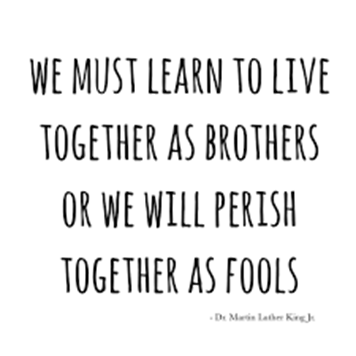
What might it mean to “stitch a country together” in our own time? This episode explores our shared desire to hold onto a dream, to stitch together differences, and to choose warmth over separation.
I read something this week as I was researching Rev. Jesse Jackson and his legacy. The story came in the wake of his passing, just as Black History Month draws to a close. The story wasn’t about elections or speeches. It was about his grandmother who couldn’t afford a blanket—so she made a quilt.
There have been many articles looking back at his campaigns, controversies, coalitions, and causes. But it was this simple image of a grandmother in Greenville, South Carolina, gathering scraps of wool and silk and gabardine and flour sacks that stayed with me.
She did not have enough money for a proper blanket. So, she took what she had. “Pieces barely good enough,” Jackson said, “to wipe your shoes with.” And she stitched them together into something that could keep her family warm—a thing of beauty and power and culture.
Jackson carried that image for decades. He used it as a metaphor for the country he believed was still possible. He once said America is not like a blanket—one piece of unbroken cloth, the same color, the same texture, the same size. America is more like a quilt—many patches, many pieces, many colors, many sizes—all woven and held together by common threads.
That was the image he offered—not as a slogan, but as an invitation.
He grew up in the Jim Crow South, learning which fountain to drink from and where to sit on a bus. He found his way into the orbit of Martin Luther King Jr., who became both mentor and moral compass. When Dr. King was assassinated, his dream didn’t die. It passed into the hands of others who had to decide how to hold it together and move it forward. Jackson was one of those dreamers.
Jackson chose to speak of the possibilities that King envisioned. He spoke of a country where the marginalized moved from the edges toward the center. Where the poor and working class—of every race—were not forgotten. Where health care, education, housing, and dignified work were not prizes reserved for the fortunate but promises extended to all. Where discrimination, in whatever form it appeared, had no rightful place.
We can debate the feasibility of policies. We can disagree on methods. But beneath it all was a larger vision—a conviction that America was capable of being more generous than its history sometimes suggests.
“Even in our fractured state,” he said, “all of us count and all of us fit somewhere. We have proven that we can survive without each other. But we have not proven that we can win and progress without each other.”
Human beings are remarkably resilient. We are capable of survival. We build walls when we feel threatened. We retreat into smaller circles. We learn how to get by. We are, in many ways, surviving right now. We go about our days. We hold onto our opinions tightly. We scroll. We sigh. We rant. We sort ourselves into smaller and smaller silos of agreement. Survival is possible that way.
But warmth? Warmth is something different. The warmth of a quilt requires closeness. It requires that pieces are held together, touching, and overlapping. It does not demand that they match—only that they hold.
I think about Dr. King’s dream—not as a frozen speech from 1963, but as something fragile and living. A dream that justice and dignity would not belong to a few but could stretch wide enough to cover a nation. Dreams, like quilts, are made over time. They are stitched through long nights—often with friends sharing as they stitch. They are repaired and patched when seams give way.
Jackson did not inherit an easy mantle when his mentor was killed. No one could replace Dr. King. But he refused to let the dream be folded and stored away. He carried it—sometimes imperfectly, sometimes controversially—but always passionately and persistently.
He believed the country could be stitched into something warmer than its history. His vision is what I want to honor in this Cuppa Joy. Not the campaigns. Not the headlines. Not the arguments. But the stubborn refusal to give up on the possibility of common ground.
During Black History Month, we tend to speak of giants—the famous marches, the thunderous speeches, the legislative milestones. But Jackson’s grandmama’s quilt reminds us that history is also sewn in small rooms, in kitchens, in houses where there isn’t enough—and someone decides to make enough anyway.
Scraps become shelter. Differences become design. The question is not whether we are identical pieces—we never have been. The question is whether we are willing to be bound by something stronger than our differences.
What threads hold us now? Is it dignity? Is it mercy? Is it the simple belief that no child should freeze—physically or spiritually—because we could not be bothered to care?
Jackson once urged people to be “as wise as my grandmama. Pull the patches together. Bind them with common threads. Form a great quilt of unity and common ground.”
He was not asking for sameness. He was asking for courage. The courage to believe that progress requires each other. The courage to admit that surviving apart is not the same as thriving together. The courage to keep hope warm.
Somewhere in Greenville, many years ago, a woman with few resources proved something simple and enduring—we may not have everything we want, but we can still create something that keeps us warm.
And that, in the end, may be the most faithful way to honor the dream held by so many of us.
I am grateful for the dreamers and the visionaries—stretching back through generations—who have dared to imagine a country stitched together by something stronger than fear. Dreamers like King. Dreamers like Jackson. Dreamers like the men in a sweltering Philadelphia summer who wrote words that still challenge us.
“We hold these truths to be self-evident, that all men are created equal, that they are endowed by their Creator with certain unalienable Rights, that among these are Life, Liberty and the pursuit of Happiness.”
Those words were never meant to be a blanket for a few. They were meant to cover us all. And perhaps that is the work still before us. To keep the dream alive.