
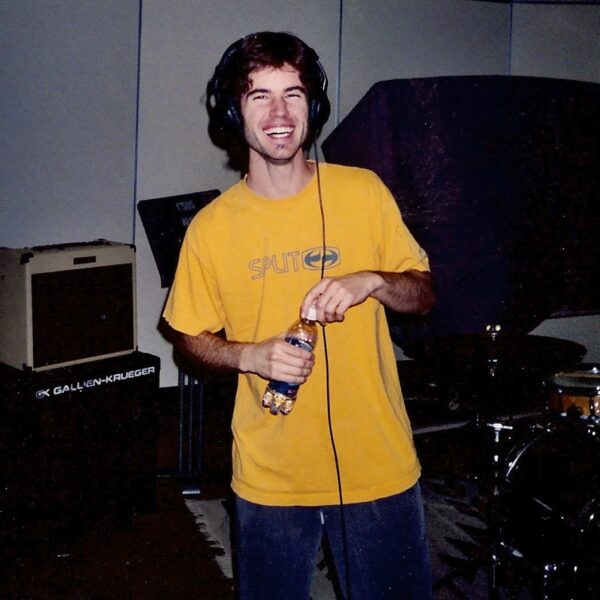
There are moments in life that change everything
July 25, 2013 began as an ordinary morning. I was in my kitchen—emptying the dishwasher, brewing a single cup of coffee—when I heard my phone ringing in the other room. I almost didn’t make it in time to answer.
The call—the one that buckled my knees—came in at 7:35 a.m. My youngest son, my sweet, beautiful, precious son Michael, was gone—killed instantly in an auto accident.
There is no preparing for a moment like that. No framework to hold it. No way to soften the impact. I heard sounds coming from me, from the depths, that I had never heard before and never want to hear again. Life split into before and after.
In the days that followed, I found myself inside a chasm of grief I didn’t know existed. There was no place to put it. No way around it—only the experience of it, raw, immediate, and all-consuming.
And yet… I also noticed something else.
Right alongside the grief and pain stood joy and love. I could feel them both—so much love being poured upon me, so much joy in remembering Michael. I called it my strange elixir—standing in the middle of joy and sorrow, seeing that the depth of my pain was matched equally by the depth of love.
In those early days—within the first two to three weeks—I also began receiving what I can only describe as clear, simple guidance. Pearls would drop into my mind quietly, almost as if being given to me. I wrote the words down in my journal as they came, not fully understanding them at the time, but knowing they mattered.
They became anchors—a way to move through something that felt impossible. I came to think of them as treasures given to me in the middle of grief.
I call them…
Treasured Observations
- Feel what I am feeling—fully. Open to all of it.
- Joy and pain balance each other perfectly, if I am open to see and feel it.
- Numbness is a safe resting place—not a destination.
- Hugging and being hugged are essential to my healing.
- The salt of my tears mixes beautifully with the sweetness of laughter—savor each moment.
- Regrets, blaming, anger, shoulda’s, coulda’s, what if’s, wish Ida’s are all signs for dead end roads filled with land mines—do not enter.
- If I notice myself already on one of those roads, turn around immediately and grab a happy memory to hold on to and pull myself back.
- Say “yes” to helping hands. Let them feed, cook, clean, sort, and hug.
- Life marches on—I get to choose the cadence that I can handle.
- Revisiting the pain only brings on more of it.
- Capture the stories while they are fresh.
- The only right way to grieve is the one that feels most right to me.
- Give myself as long as I need. Listen to my heart.
- Choose which thoughts I want to spend time with. Healing thoughts lift my spirit.
- Stay in my heart space, listen to its wisdom. Let it guide all of my decisions.
- Some words carry more comfort than others.
- Watch for signs from my loved one—listen, feel, sense—serendipitous coincidences, alignment and perfection of timing—and especially hummingbirds.
- Sleep when I can. Time loses its grip and calendars are of little interest.
- It’s okay to cry and it’s okay to laugh—all at the same time.
- Focus on the beauty in front of you, and not on what’s missing or on wishing things were different.
- Forgive everyone everything.
Demanding a Blessing
Somewhere along the way, I made a decision. If this was what life was placing before me—this unbearable, heart-shattering loss—then I was going to meet it fully. Not avoid it, not numb it, not bury myself alongside my son. I was going to work with it. I was going to wrestle with it until it blessed me.
I began to ask a question that would shape everything that followed: Where is the gift in this? What did this come to teach me? Not in some distant, abstract way—but here and now, right in the middle of it. I demanded that it show me, and I paid attention. I observed my thoughts.
There were moments—early on—when I noticed something unexpected: a day when I didn’t cry, a moment of ease, even a flicker of joy. And I caught myself wondering—was something wrong with me? Was I grieving too fast? If I was feeling joy, did that mean I didn’t love my son enough? Should I pull myself back into the sorrow to match what I believed grief was supposed to look like?
I had been given plenty of messages about what grief should be—that there would always be a hole in my heart, that I would never be whole again, that a piece of me was forever missing. I understood these words were often offered with care—an attempt to relate or comfort—but something in me knew that was not my truth.
And so, quietly and firmly, I chose not to take them in. Not true for me. Instead, I stayed with what I was actually experiencing.
There is another way
This space is an offering of that way—not as a prescription or a set of answers, but as a lived experience. What is possible may not look the way you’ve been told it should. It may come more quickly than expected, or more slowly. It may arrive in quiet moments you almost miss, or feel unfamiliar at first—like something you’re not sure you’re allowed to feel.
I have come to believe that even in the presence of deep loss, something within us still leans toward peace—not as something we force, and not as something that replaces the pain, but as something that can quietly exist alongside it.
Over time, I have seen this not only in my own life, but in others who have walked through grief and found their way, step by step, into a different relationship with it. The soil of sorrow is sacred—rich with the potential to grow our souls—but only if we are willing to work with it.
It is possible to create a new normal, to laugh without guilt, to feel moments of peace, and to sense the presence of the one you love in new ways. We reconnect with our own lives not by leaving them behind, but by carrying them differently.
We do not walk this path alone. In ways both seen and unseen, we are accompanied—by love, by memory, and by something that continues to connect us to those we have lost. And slowly, gently, it becomes possible to live again with a sense of meaning, connection, and even joy—held within a broken-open heart that has been forever changed.
If you’d like to go deeper into what that “other way” looks like from the inside, keep reading. Let me take you back to that day again—not just what happened, but how I lived these truths in the hours and days that followed… what I leaned on, what I chose, and what helped me keep my heart open when everything in my world had fallen apart.
A Deeper Dive
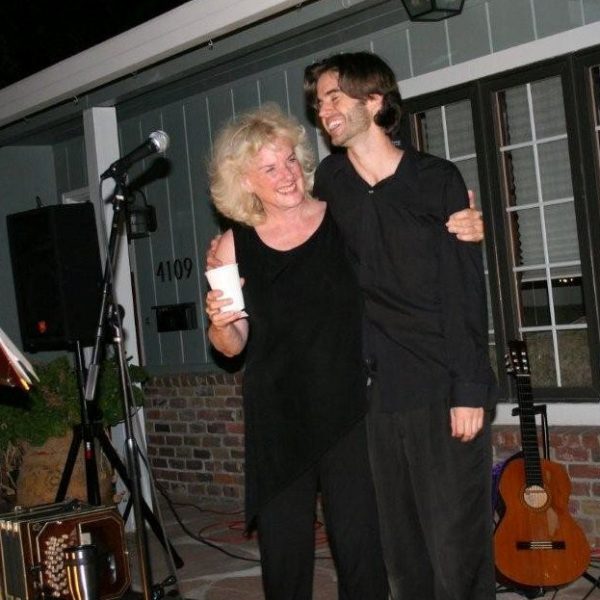 July 25, 2013 was just another ordinary day. Until it wasn’t. That’s the day I got the call every parent dreads. My youngest son Michael had been killed in an accident. I could not unring the bell. I could not undo the death. I could not turn the clock back.
My son’s death felt like a meteor crashing into my heart, creating a bottomless crater of pain the size of which I had never felt. I had no place for this new reality—a collision with my known world, a force I could not control, and an impact I didn’t know how to make space for. I remembered the Serenity Prayer. All of a sudden, I was living the toughest piece of it—Accept the things you cannot change.
In my life before impact, I had been through a divorce, a bankruptcy, and a break up or two, but never a knee-buckling, heart-wrenching, ripping open of my soul like this. I had never been shaken to the very core of my being. I didn’t know anything could hurt so much. I was in shock, followed by numbness, and my whole world felt like it was moving in slow motion.
Almost immediately the healing waters of love, caring, and compassion began flooding in from everywhere, soothing my pain. My two older sons and my sister immediately came to my side and became my rocks. Emails, texts, and phone calls broke the news to friends. Cards, gifts, and flowers poured in. Close friends brought trays of food and cases of drinks. They took care of cooking and cleaning up. I surrendered into the many arms of love supporting me, as I began making impossible decisions and accepting that life as I had known it no longer existed.
What I didn’t fully realize at the time—but can see clearly now—is that I had spent years preparing for this moment. While I would never have asked for this most painful path, in looking back, I found I had been in training, and the tools for transforming grief were at my fingertips.
I had built a strong foundation in mindfulness studies, personal empowerment, mind-body connection, metaphysics, and spiritual principles. For years, I had studied with some of the best teachers in the self-development field. I knew the principles they teach work, if you work them. So, I chose to have my son’s death, this heart-breaking event in my life, become a testing ground for the truths I had been studying for years. I knew the principles worked. Now I had to live them.
I was able to see what really works, in the field, on the ground, bullets flying.
Throughout my process, I could feel an inner warning to pay attention to my responses. I knew I could not change the fact that my beloved son had died. That was out of my hands. But I also knew—just as clearly—that I was responsible for how I responded. And that response would shape everything that followed—for me, and for those around me.
I consciously turned to principles that had held me so steadily in other dark nights of the soul. I knew that my thoughts mattered. That they would either pull me deeper into pain or help me find some way to stand. So, I paid very close attention to what thoughts were trying to take root.
I knew that what I focused on would grow stronger. So, when I felt myself slipping into despair, I deliberately reached for something else—something that connected me to love.
I knew the power of imagery and focus. So I began holding onto what brought me even a moment of peace, even a flicker of gratitude in the midst of the pain.
I committed to doing the work. For example, I would look at Michael’s pictures and listen to his recorded music and watch videos. Instead of collapsing into despair and sadness, I would remember how much I love him and how grateful I am that I had the gift of being his mother and sharing his life for 36 years. This practice continues today.
From my willingness to become immersed, to embrace, and to accept that there was no rewind, no escape, just a full-on experience of what was happening in me, around me, through me, I became an explorer of my inner workings like never before. What was I thinking and feeling? What thoughts were helpful and which brought only more pain? What images kept repeating? Could I do anything about them? Could I truly empower myself through my thinking? Was there a way to expand from this process, to actually grow in my trust of life?
It may seem odd, but in the middle of the chaos, I was consciously more interested than ever before in how I could take this most painful experience, the death of my beloved son, and wrestle from it the gift of a blessing. How could I find joy and grace in the midst of unspeakable sorrow? And how could I use this sacred soil of sorrow to grow myself instead of burying myself with my son?
With an event like death, there’s no arguing with it, no bargaining, no benefit in being angry or staying in shock and numbness for countless years. It is what it is. Death is final. For me the questions I wanted to ask myself were, “How do I be with this? How do I respond in such a way that it not only blesses me, but honors Michael, and allows me to bless others? How do I respond so that I can shine the light of possibility for others to see?” How can I share the things that are working for me, so that others may be helped?
I leaned into the experience as best I could. I embraced my feelings. My heart was broken wide open, and I was determined to keep it open. I knew if I tried to numb out the pain, I would also numb myself to the love and the joy pouring my way. I also knew that trying to bury feelings is like trying to bury a live worm. You can bury a rock, but that worm will find its way to the surface. I vowed to feel everything fully.
I began to notice the many moments when tears and laughter, pain and joy, comforting and being comforted were all occurring simultaneously. I witnessed a perfect balance between the pain and the love flowing my way. I surrendered to the process of grief, became acutely aware of the present moment, and faced the unknown.
I kept an explorer’s curiosity about my process, knowing that these were sacred unrepeatable moments. I knew I couldn’t go back later, so I vowed to capture them in writing. When I was sharing my experience with others on social media, I did it with the intention that the words I chose and the thoughts I shared would inspire hope and not just parade my pain in front of readers.
Journaling became a powerful healing tool, allowing me to ask myself, “Are these thoughts and feelings taking me where I want to go, or bringing my energy down?”
I knew that the grief that loomed before me was going to be shaped by my ability to hold steady and choose how I was going to be in the face of this death, even down to how I chose to label it. I became very aware of the language being used around me. Friends and loved ones were saying “this is horrible, this is tragic, you’ll never be the same, you’ll always have a hole in your heart,” and more words that they must have thought would be comforting—all actually sowing seeds of forever-suffering, of cultural expectations, and of disempowering beliefs around death and dying.
I knew these ways of referring to the event were not helpful. I wasn’t denying my feelings, or burying them, I was just noticing them and exploring how they played themselves out, listening to my heart, and choosing my responses moment by moment.
I became very aware of language that made me feel like a victim. I saw that I didn’t want to label the death as traumatic and then live with that interpretation. It certainly wasn’t an event that I wanted to create or imagined ever happening, but it did happen and I was getting to choose how I’d label it and how I’d interpret it. That was something I did have power over.
I don’t like to use the term loss. I am wary of disempowering labels, as I know that when you name something, you are giving it energy. I know our thoughts create our experience, and moment by moment, I had to decide what I was going to allow myself to think. Our thoughts can actually affect our body’s biochemistry. I found that thoughts of “woulda shoulda coulda, if only, what if, maybe then,” all of the inner turmoil about the past and the future over which I have no control, would only bring me down into re-experiencing and refreshing the pain—bringing the past trauma into the present moment.
Granted, when I first got the news, I was in shock and my thinking brain pretty much shut down, leaving me raw with feelings and emotions. My heart was broken open. I learned that pain comes and goes, like waves on an ocean, and the waves of sadness were always triggered by thoughts and memories. If I chose to revisit over and over and over again the memory of receiving the dreaded phone call, I could experience that same pain for the rest of my life. I learned instead to focus on joy-filled memories and use them to pull myself back whenever the temptation arose to travel the path of blame, unforgiveness, or woulda shoulda coulda.
I also had the very clear thought that if the Universe dared to take from me such a precious gift as my son, then there must be a compensating blessing. I was determined to wrestle with this grief until it blessed me. I didn’t know how the blessing would show up, but I knew that if I didn’t look for it, I wouldn’t see it.
In looking back, I can see many blessings now. Would I give up all of the blessings to have him back with me? Of course—in a hearbeat. I’d be lying if I didn’t say “yes” to that question. However, having him back here in the flesh with me is not an option.
One of my blessings was realizing that the way I was working through my grief could be a benefit to others if I could share what I was learning. Friends were commenting on Facebook that they were experiencing their own healings from what I was sharing and that I needed to write a book. I felt the nudge and over the 24 months following Michael’s death, I leaned into the idea and wrote four.
The first was a book of poems, Moments of Stillness, that had been languishing in my computer for over 10 years. It illustrates another principle: start with what you have, where you are, and take the first step. Previously, I had stopped myself by wondering who was going to publish anything I wrote, especially a poetry book. I discovered I could self-publish with no expense. I didn’t need anyone’s approval, permission, or a bank account to fund it. I had the raw materials. I had the vision. And now I had the path. I just needed to take action.
Seven months later I published my second book, From Grief to Grace…A Mother’s Journey. It tells the story of my process in a way that shows the principles I was using, and the beliefs and affirmations I was holding onto. It’s filled with hope, more poetry, and the raw footage of 32 weeks of Facebook and journal entries, which I call the bread crumbs of my journey.
I completed it one month before the anniversary of Michael’s death so I could make it available to the friends and family who would be coming to the party I was throwing to celebrate his life and his music. And party we did. We had a wonderful celebration filled with music, stories, and laughter, all mixed with a few tears. The following year I completed my third book, Finding the Good in Unspeakable Sorrow.
My fourth book , Tilling the Sacred Soil of Sorrow, grew out of my desire to create a very gentle, guided process for living joyfully from a broken-open heart. It takes the principles I’ve learned from the many master teachers in my life and translates them into a healing path anyone can follow.
Another blessing is that I know, without a doubt, that we are forever connected to our loved ones. In our broken-open heart space, we are able to connect beyond the veil of death. Love never dies. I believe we are spiritual beings having a human experience. I know from personal experience that when you change the way you look at things, the things you look at change. I believe changing the way we look at death can change the way we feel and respond when a loved one leaves this physical realm.
I have experienced so many instances of afterlife connection with Michael, beginning within hours of his passing. I’ve written about them in my journal. I’ve taken photos of hearts on the ceiling and images in clouds. I’ve done my best to capture with my pen the joy that bubbles up inside of me whenever I get signs and symbols and quiet communications deep within. Sometimes I feel a fluttering near my heart, and other times I’ll get a shiver and chills across my neck and back. Sometimes it’s just a knowing that he’s here with me. Often songs are his favorite means of reaching me.
I had never had experiences like this before. I didn’t consider myself psychic nor had I had unexplainable experiences with people on the other side. After my son’s death, I couldn’t seem to get enough information about afterlife communication. In the first few months, I was hungry to understand the signs that I was experiencing.
I wept, when just two days after Michael’s death, I heard the song “When Angels Whisper” for the first time. He had written the lyrics and recorded the song just a couple of months before his death. I feel like his soul meant it as a gift to mine. He sings, “I’ll meet you at the end of the rainbow, I promise you this. Anytime the rains come storming, I’m there you can’t miss. So fill your life up full with joy and laughter. Laughter is a very vital thing. Listen to your angels, they know why you’re here and what you’ve come to bring.” We played the song at his memorial service. It was unlike any song Michael had ever written before.
On the three-week anniversary of his death, I woke up sobbing so hard I couldn’t even see a magnificent sunrise lighting up the horizon. Michael again reached out to comfort me, and this time I heard his voice from behind my right shoulder. He spoke these words to me from the heavens, “Mom. Pay attention to the beauty all around you. Don’t miss it being sad, wishing things were different. I’m right here.” I did hear him, felt his presence right behind me, and wiping my tears, I saw before me a rainbow of morning sunrise bathing the heavens in golds, and purples, and reds, and oranges. Listening to my angel-son, I knew all was well. Yes, there would be many more tears, and many more lessons, but I knew I was not alone.
Nine months before he was born, Michael visited me in a dream, and I knew he was to be my third child. Michael comes to me now, teaching me the language of spirit. He’s gone home, and yet I feel his presence and know he’s always with me. I’m the one that’s probably in the dream state, and I continue to know in my heart of hearts that all is well.
I continue leaning into not knowing exactly what all of my blessings will be, but trusting the guidance, trusting the teaching, staying present, visualizing what I want no matter how unclear it might seem except for the next step. I am willing to embrace the process. To explore and stay awake. To empower the thoughts that bring me peace and discard the ones that don’t. To empower the belief systems that move me forward, and let go or transform the ones that are limiting. This keeps me moving forward, continuing to expand to include what’s next, knowing that if I look for the gifts, I will surely find them.
Without a doubt, the biggest blessing in my life since Michael’s death has been knowing I can live joyfully from a broken open heart. I discovered that keeping it open allowed me access to higher realms of awareness and joy in the midst of the pain.
When your heart has been cracked open, don’t close it. Live from that place. Use the sacred soil of sorrow to grow your soul, not to bury yourself. If you stay present you’ll notice sacred moments and sacred experiences deep within the sorrow that bring you closer to yourself, to your God, to whatever you want to call that space that knows all is well.
In the years following Michael’s passing, I was invited to share more about my experience — not just the loss, but the continued connection I felt with him and the way my understanding of grief began to shift.
This interview, “Spirit of Resh,” offers a deeper conversation about that journey — how love continues, how meaning unfolds, and how we can move from grief toward grace.
A Quiet Place to Reach Out
If something you’ve read here has touched you, or if you are carrying something you would like to share, you are welcome to reach out and explore further. While I am no longer offering formal sessions, I do read what is sent, and I hold those who write to me with care.
There are books I have written, and there is a place to reach out if you feel called to connect. Sometimes it helps simply to put words to what we are feeling—to be witnessed, even from a distance. You are welcome to email me directly at robyn@delongteam.com
And if all you need is to pause here for a moment and breathe, that is enough too.
Life is precious. Handle with love.