
(Prefer to listen? Tap here)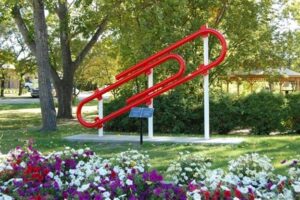
New Year’s Resolutions Reimagined
I’ve been thinking about New Year’s resolutions. Statistics tell a familiar story. About forty-five percent of Americans set New Year’s resolutions, yet fewer than ten percent sustain them long-term. Younger adults under 30 are far more likely to make resolutions than older ones. By the time we hit fifty, the 80/20 rule has kicked in—only about twenty percent of us even bother.
By midlife, most of us have learned the definition of insanity—doing the same thing over and over and expecting different results.
Most New Year’s resolutions are private negotiations with ourselves. “I will fix this. I will be better. I will finally become…” They tend to focus on health, finances, or self-improvement. They’re often forged in isolation. Many require building new habits. Most are quietly dropped by February.
What if we asked a different question? What if instead of How can I improve myself this year? we asked, “What kind of difference might I make that involves working with others?”
What if we chose projects that need community, that can’t be completed alone, that grow stronger with each person who adds their curiosity, humor, skill, or kindness? And what if we let play, not pressure to change, be the starting point?
Today’s Cuppa Joy is about someone who did just that. It wasn’t a New Year’s resolution—it happened mid-year—but it makes a compelling case for projects that inspire.
In July 2005, Kyle MacDonald, a 26-year-old Canadian blogger living in Vancouver, made a quiet, playful decision to experiment with an idea. He started with one ordinary red paperclip. Not a business plan. Not a five-year goal.
Inspired by the childhood game “bigger and better,” Kyle asked himself: “What might happen if I try to trade this little red paperclip for something a little better?” He made one simple commitment. He would trade only one item at a time, face-to-face whenever possible, and trust curiosity more than strategy.
What followed unfolded over fourteen trades, one year, and thousands of miles.
- His journey began in Vancouver July 2005 when he traded the paperclip for a fish-shaped pen.
- He then traded the pen that same day for a hand-sculpted doorknob from Seattle, Washington.
- In Amherst, Massachusetts, on a trip with a friend, he traded the doorknob for a Coleman camp stove (with fuel).
- A few months later he took his camp stove to California and traded it for a Honda generator.
- From there he went to Maspeth, Queens, and traded the generator for an “instant party” consisting of an empty keg, an IOU for filling the keg with the beer of the bearer’s choice, and a neon Budweiser sign.
- Five months into the game and a long way from the red paperclip, he traded the “instant party” to Michel Barrette, a Quebec comedian and radio personality, in return for a Ski-Doo snowmobile.
- Within a week of that, he traded the snowmobile for a two-person trip to Yahk, British Columbia, scheduled for February 2006.
- In early January, he traded one of those spots on the Yahk trip for a box truck.
- Then he traded the box truck for a recording contract with Metalworks in Mississauga, Ontario.
- By April, he had traded the recording contract to Jody Gnant for a year’s rent in Phoenix, Arizona.
- Within a week, he had traded the year’s rent in Phoenix for one afternoon with Alice Cooper.
- Then he traded the afternoon with Cooper for a KISS motorized snow globe.
- The snow globe was traded to Corbin Bernsen for a role in the film Donna on Demand.
- And finally in early July 2006, almost exactly a year from starting his experiment, he traded the movie role for a two-story farmhouse in Kipling, Saskatchewan, 986 miles from his home in Vancouver.
I had to ask myself, “How did he find people from all over who were willing to play this game with him?” The answer: He didn’t keep it a secret. He didn’t try to persuade people to participate. He offered belonging. He offered fun.
Kyle documented the entire experiment on a simple blog, which became his hub, and eventually a book One Red Paperclip. Every trade was posted publicly, with photos and reflections. His very first post began simply: “This red paperclip is currently sitting on my desk next to my computer. I want to trade this paperclip with you for something bigger or better, maybe a pen, a spoon, or perhaps a boot. If you promise to make the trade, I will come and visit you, wherever you are, to trade.”
He added a postscript that revealed both his humor and his hope: “PS: I’m going to make a continuous chain of ‘up trades’ until I get a house. Or an island. Or a house on an island. You get the idea.”
People didn’t trade because they were getting the “better deal” in a traditional sense. They traded because they liked being part of a story, they enjoyed the playfulness, and they wanted to be able to say, “I was part of that.”
Kyle later said many trades happened not because the items were objectively “worth more,” but because they were often deeply personal. Someone would say, “This object doesn’t mean much to me anymore — but I love what you’re doing.” “This makes me smile.” “This fits my story.” “I like the spirit of this.”
Kyle was willing to travel to meet people — often at his own expense, sometimes staying with friends or hosts along the way. Distance amplified participation. It expanded the story’s reach, pulled in new communities, and sparked local pride. The adventure became newsworthy.
After completing the final trade in the small prairie town of Kipling, Kyle honored the spirit in which the town had participated. They had embraced the project with delight and civic pride. They rallied behind the idea—hosting him, celebrating the trades, and leaning into the joy and whimsy of the project.
Rather than moving in or selling the house for personal gain, Kyle returned the house to the town’s use. It has become part of the community’s identity and continues to function as a tourist attraction. A landmark 15-foot-tall, 3,000-pound steel sculpture of a red paperclip was installed next to the farmhouse. It became both a destination and a symbol of what’s possible when fun and play are involved.
Kyle has been clear in interviews that the project stopped being “about him” long before the final trade. The value was in participation, generosity, and shared imagination, and keeping the house purely for himself would have broken the spell.
Kyle didn’t “win.” He completed a circle. The house wasn’t the reward. The real wealth was the trust, creativity, and goodwill exchanged along the way. He honored the community that made the ending possible.
Kyle showed us what can happen when our goals extend beyond ourselves and involve others in doing something fun, creative, and ultimately making a difference. That feels like a New Year’s resolution worth pursuing any day of the year.