Prefer to listen? Click here.
The Gift of Belonging
A story about orphan trains appeared in my Facebook feed recently, and I haven’t been able to shake it.
Between 1854 and 1929, an estimated quarter of a million children were placed on trains and sent from crowded eastern cities to rural communities throughout America. Some had lost their parents. Others had been abandoned. Many were simply children of poverty whose families could no longer care for them. They boarded trains carrying little more than a small suitcase and the hope that someone, somewhere, might choose them.
Some found loving homes. Others found lives of hard labor and loneliness. All of them left behind everything familiar.
As I read their stories, my heart ached. It is difficult to imagine being a child and watching your world disappear. Today’s headlines often bring similar stories. Whether the cause is war, poverty, illness, addiction, incarceration, immigration raids, or family breakdown, children continue to experience the pain of displacement. The circumstances may change, but the heartbreak remains the same. A child loses the people, places, and routines that make the world feel safe.
The orphan trains were still running during my grandparents’ childhoods. While none of them rode those trains, loss found its way into their lives as well.
My dad’s mom, Grandma Lucille, was born in 1900. When she was five years old, her mother died. The family story is that she discovered her mother’s body in bed. I have no way of knowing whether every detail is accurate, but I do know she lost her mother far too young. Her father was unable to care for her, so she was sent to live with relatives. From what I was told, life was not especially kind. She worked hard from an early age and was expected to earn her keep. At some point, rather than paying for dental work, all of her teeth were pulled. She wore dentures for the rest of her life, and they never fit comfortably.
My dad’s father, Grandpa Slim, born in 1890, had a different childhood, but equally difficult. After his father died, his mother could no longer care for him and his younger brother. They were placed in a boys’ home and remained there until they were old enough to enter military service.
On my mother’s side of the family, there was loss too. My Grandma Elizabeth, born in 1896, lost an older brother to diphtheria and a year later lost her father to tuberculosis. Her mother never remarried. Yet my grandmother’s story unfolded differently. Her mother and extended family surrounded her with care. Together they traveled by train and saw parts of the country that many people never experienced. The losses were real, but so was the support.
As I reflected on these stories, I realized that tragedy alone does not determine the course of a child’s life. What happens afterward matters just as much. Who steps forward? Who provides safety and stability? Who offers belonging when a child’s world has been turned upside down? The answers to those questions often shape a life far more than the tragedy itself.
Perhaps that is why I have always loved Anne of Green Gables. Published in 1908, it has certainly stood the test of time. My grandmother was only twelve years old when it first appeared. I often wonder if she read it and loved it as much as I did. When PBS aired the series based on the book, I watched it with my mom. Years later, I watched it again with my granddaughter. Three generations—possibly four—all captivated by the same story.
The more I learned about Lucy Maud Montgomery, the author, the more meaningful the story became. Montgomery lost her own mother as a baby and was raised by her grandparents on Prince Edward Island. She understood loneliness and longing. She knew what it felt like to be different and to wonder where she belonged. It is easy to imagine that some of Anne Shirley’s deepest yearnings came from her own heart.
Anne is not alone in literature. Pollyanna arrives to live with a stern aunt after the death of her parents. Annie grows up in an orphanage before finding her way into the life of Daddy Warbucks. On the surface, these are stories about children who have lost their families. Yet I think their enduring appeal lies elsewhere.
The real transformation occurs in the adults. Anne softens Marilla’s stern edges and awakens Matthew’s quiet tenderness. Pollyanna’s Glad Game melts her aunt’s guarded heart and eventually spreads throughout an entire community. Annie brings warmth, laughter, and love into Daddy Warbucks’ carefully ordered world. The child receives a home, but the adults discover something they didn’t know they were missing. Love flows both directions.
At their heart, they remind us that every child needs more than food, shelter, and clothing. Children need to know they matter. They need to know they belong. They need to know that someone is glad they are here. And perhaps we need children as much as they need us. Their curiosity, wonder, and capacity for joy remind us of what is most important.
Looking back, I can see how fortunate I was. When I was fifteen, my parents divorced. Like many teenagers, I experienced the pain of watching my family change in ways I never expected. The foundation I had always known shifted beneath my feet.
Yet through it all, I never doubted my mother’s love. I never questioned whether there would be a roof over my head, food on the table, and clothes on my back. Mom somehow managed to create a sense of security even while navigating one of the most difficult periods of her own life. She stood on solid ground and made sure I had solid ground beneath my feet as well.
As I think about my two grandmothers, I see how differently love can be expressed. The grandmother who lost her mother at five was not what I would call warm and fuzzy. She would hug me hello but after that, affection did not come easily for her. Yet she always made sure there was a good meal on the table and cookies in the cookie jar. Looking back, I suspect that was her language of love. She may not have spoken it in words, but she expressed it through care.
My other grandmother showed love differently. She played games with us, taught us card games, drew pictures, and told stories. She gave us her time and attention. One grandmother nourished our bodies. The other nourished our imaginations. Both were saying the same thing, “You matter.”
As I grew older and became a mother myself, I realized that one of the greatest gifts my own mother gave me was not something she bought or taught. It was the certainty that I was loved unconditionally. When life’s storms arrived, I stood on that foundation.
And then I passed it on. My sons always knew they were loved, no matter what. They did not have to earn it. They did not have to perform for it. They did not have to be perfect to receive it. It was simply there, steady and dependable, like the love my mother gave to me.
The orphan trains ended nearly a century ago, but the lesson remains. Every child deserves at least one person who says, “You belong here.” Not because life will be free of hardship. It won’t. Loss, disappointment, and change are part of every human story.
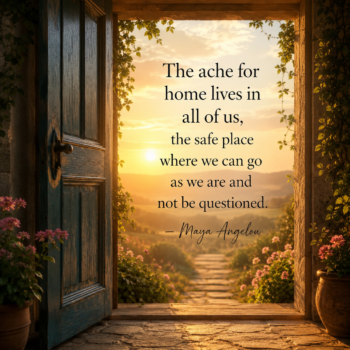
What makes the difference is knowing that when those difficult seasons come, there is someone who will stand beside you. Someone who will choose you. Someone who will love you. Someone who will help you find your way home.
Today, I celebrate and honor all those who cherish our children. Parents and grandparents. Foster parents and teachers. Neighbors, mentors, and friends. The people who open their hearts and make room at the table. And I am grateful for the children themselves, who remind us how fragile and important love is. They remind us that what matters most is not wealth, success, or achievement, but knowing that we are loved—and helping someone else know it too.