Prefer to listen? Click here.
Before and After
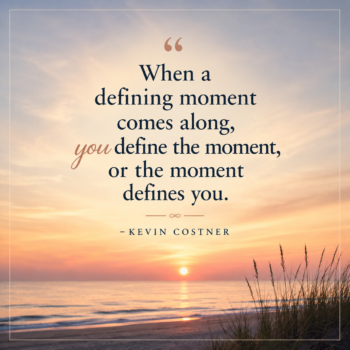
This Saturday, July 25th, marks a before-and-after day for me. We all have them. None of us gets through life without before-and-after moments. We don’t spend much time thinking about our befores until something changes. If I asked you to think about your own defining moments, I suspect your list would come quickly. Your wedding day. The birth of your first child. Retirement. The diagnosis. The divorce. The phone call that changed everything. A move. Financial hardship. The loss of someone you love. Each one divided life into a before and an after.
We choose some of our defining moments. Some are joyful. They are anticipated and celebrated. We welcome those. And some break our hearts. They come without warning—unbidden, unforeseen, and unwelcome.
No matter how they arrive, they are called defining moments because they have the power to reshape our priorities, our routines, and our very lives. These events not only change our circumstances, they change us. We may long for a “before,” but we are living in the “after.”
I love the humor of the late Erma Bombeck and the title of her book, If Life is a Bowl of Cherries, What am I Doing in the Pits? How do we deal with the pits? How do we respond to the stuff we don’t like and didn’t ask for?
I found myself thinking about defining moments as I sat down to write this week’s Cuppa Joy. When I look over my own life, I can see those dividing lines scattered across the years. I was 15 when my mother called to tell me my father had fallen in love with another woman. My life altered at age 21 when I held my first baby in my arms. I often joke that becoming a mother activated some preset “mama gene” in me. Suddenly I carried an internal alarm system I had never known existed. My priorities shifted overnight. The world no longer revolved around me. I was a mother for life.
Other befores and afters followed: career changes, divorce, becoming a grandmother, and losing Michael. That was the big one. July 25th, thirteen years ago, I received the call any parent dreads—the call telling me he had been killed in an accident. One day he was here. The next day he wasn’t. Nothing I could say or do would change those facts.
For much of my adult life, I’ve approached difficult experiences with the same questions. My sons will tell you they can almost predict what I’ll ask them whenever life knocks them sideways.
“What’s your takeaway?”
“What did this come to teach you?”
“How can you use this to grow?”
They’ve heard those questions for years, and they use them. The truth is, I’ve asked them of myself just as often. Somewhere along the way, I trained myself to believe that even painful experiences have something to teach us if we’re willing to pay attention. I don’t always like the lesson. I certainly don’t always welcome the teacher. But I’ve learned that asking better questions usually leads to better answers.
The before-and-after moments simply provide the stage upon which the questions become important. Will we become bitter, or will we allow this experience to make us better? Will we close our hearts or leave them open? Will we circle in the cul de sac of “Why me?” or ask ourselves, “How can I find a blessing in this?”
That July morning, I wasn’t ready for questions or answers. Those came later. There was only the next thing that needed doing. My older sons needed to know. My sister needed to know. Then I had to drive to my mother’s house and wake her from a peaceful sleep to tell her that her precious grandson was gone. I remember realizing that although I couldn’t change the biggest reality before me, I could still choose the next step. I could make the next phone call. I could put one foot in front of the other. I could listen to my heart. I could breathe.
Sometimes that is all any of us can do.
As the days unfolded, friends filled my home. Cards arrived. Meals appeared. Stories about Michael were shared around the kitchen table. Hummingbirds lingered outside the windows. I began noticing countless expressions of kindness that reminded me I wasn’t walking this road alone.
I also noticed life had been preparing me—not for tragedy, because no one prepares for the death of a child—but for asking questions that lead toward healing instead of despair.
My questions hadn’t changed. They had only intensified. Because I had trained myself for so many years to look for the blessing in everything, my soul was screaming, “Find the blessing!” I felt there had to be more—that if the universe dared to take such a precious gift from me, there had to be a blessing, no matter how horribly it was packaged.
So, I chose to let Michael’s death, this heart-wrenching event in my life, become a testing ground for what I believed, to see what really works, in the field, on the ground, bullets flying. How do I take one of life’s most painful experiences and wrestle from it the gift of a blessing? How do I use this pain to grow?
Those became my questions. I was committed and determined to find the good in this unspeakable sorrow. I didn’t know how. I didn’t know where. But I did know I would only be satisfied with answers that helped me understand and grow.
I refused to bury my joy with his ashes. Not because I wanted to explain away the pain. Not because I believed losing a child was somehow “meant to be.” Rather, I couldn’t imagine living the rest of my life believing that something so devastating could only leave destruction behind.
I wouldn’t wish grief on anyone. Nor would I ever tell someone in the middle of fresh loss to “look for the blessing.” Those words arrive too early. But time has given me perspective. Looking back, I can see that the moments demanding the most of me have also taught me the most about compassion, resilience, gratitude, and love. They slowed me down enough to notice what had always been there—friends who show up, family gathered around the table, hummingbirds at the window, and the extraordinary gift hidden inside our ordinary days.
Perhaps that’s one of life’s mysteries. We spend enormous energy trying to avoid difficulties, yet many of the qualities we most admire in others are born there. Patience. Gentleness. Wisdom. Empathy. Courage. They rarely appear fully formed. More often, they are slowly shaped by experiences we never would have chosen.
As I remember July 25 this week, I still wish it had never happened. If love alone could have changed that day, Michael would still be here. But I also know the woman writing these words today is not the same woman who answered that telephone thirteen years ago. I found my blessing. The questions I had practiced asking throughout my life didn’t erase my grief. They gave me a way to walk through it, to live joyfully with my broken-open heart. They eventually led to books, conversations, friendships, and writing this Cuppa Joy each week.
Our life stories are full of defining events—befores and afters. We cannot know ahead of time what a change will ask of us. But we can choose the questions we ask. We can decide to look for the grain of good, the seed to plant in the soil of sorrow. Perhaps what matters most isn’t the event itself, but the questions we ask and what they lead us to discover about ourselves.
I don’t have the answers, just some good questions. Perhaps you’ll discover a few questions of your own whenever you find yourself wrestling with an after and looking for your own blessing.