
Prefer to listen? Click here.
If You Could See What I See
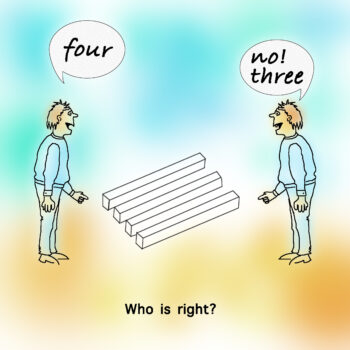
I’ve been thinking about perspective—how much our point of view affects our beliefs, our opinions, our willingness to engage, our ability to forgive. How hard is it to look from another’s perspective? To see what they are seeing? I’m not sure, but I believe it is the key to healing our differences—maybe even to ending wars. And to see from another’s perspective, we must listen to their stories.
This Cuppa focuses on Veterans Day—a day when we honor those who have served in our armed forces and, sometimes, have the privilege of hearing their stories. I joined my Rotary Club over 24 years ago. Since then, I’ve listened to remarkable stories from fellow Rotarians whose military experiences in WWII and Vietnam were far removed from my life. These were friends and neighbors, people I sat beside at lunch and worked alongside on community projects. I might never have known what they had experienced if someone hadn’t invited them to share their stories. I often discovered I was sitting next to heroes.
I loved watching our veteran members march in with their colors as the songs of their respective branches of service were played. But the years have passed, and one by one, our World War II veterans and many from Vietnam have passed away as well. There are fewer men and women in our club who have served, and what was once a proud parade of military branches has gradually changed from marching to standing.
Thinking about Veterans Day made me realize how little I know about my own family members’ military experiences. My paternal grandfather served in World War I. His father died when he was young, and his mother placed him and his younger brother in a boys’ home. Both boys eventually joined the military. Was it patriotism that led them there, or did the military offer a future they couldn’t otherwise imagine? I don’t know. I never thought to ask.
My father served during World War II, training pilots in Arizona when the Air Force was still part of the Army. He never went overseas. My mother’s brother, Uncle John, was in the military during both World War II and Korea. Again, I know very little about his experiences.
And then there was my stepfather. He married my mom when I was 21, while I was living with her and my husband was serving in the Army. His story may be the one I most wish I understood.
He was born in Ohio to German parents and grew up during the Depression. His family struggled financially, and I’ve heard that he began riding the rails at fourteen, eventually joining the Navy at sixteen by lying about his age. He was approaching his discharge when the Japanese attacked Pearl Harbor. I’ve heard that he was among the first to fire back at the attacking planes. A neighboring ship apparently shielded his own from torpedoes, possibly saving his life. His ship was repaired, and his military service was extended until the end of the war.
There were other fragments of stories. I believe he may have been at Normandy. I remember hearing that he once told my mother about holding a cigarette for a dying friend on a beach. I don’t know how accurately I’ve remembered these stories, and sadly, there is no one left to ask.
His temper and kindness lived side by side. He could be remarkably loving and sentimental, yet sometimes emotionally cruel to my mother and his children. He climbed the ladder of success in business but floundered as a father and husband. He was very proud of his German heritage, and I’ve often wondered what it was like for him to fight against the country of his ancestors. I’m sure he was affected by his childhood, the hardships of the Depression, and the horrors he may have witnessed in war. Did he suffer from what we now recognize as post-traumatic stress? I have no way of knowing. Understanding what shaped him wouldn’t excuse the hurt he caused, but perhaps it would help explain some of the contradictions in the man I knew.
My own experience with the military came during the Vietnam War, when many classmates and the man I would eventually marry were drafted into the Army or joined other branches to avoid being drafted. My ex wasn’t exactly eager to serve. As a college dropout, he’d moved often enough that his draft notices couldn’t keep up with him. Imagine my surprise when I called to say hello one July morning, only to learn from his roommates that his father had whisked him off to the bus station to report for Army processing in New Orleans. Apparently, Dad was just one step ahead of the military police.
He completed basic training at Fort Polk, Louisiana. The rest of his unit went to Vietnam, but he was sent to South Korea, where he served as a cook. As far as I know, he was never in serious danger. Despite being married for 27 years, I know surprisingly little about that chapter of his life, other than that he was great at cutting up onions.
Again, I’m back to thinking about perspective and wondering how differently these men understood their service. Some people join the military out of duty and patriotism. Others seek education, employment, security, or a fresh start. Some, like my former husband, had no choice at all. He felt like he’d been captured. Whatever brought them into uniform, they were still individuals with families, hopes, fears, and dreams. And when they came home, many were permanently changed by what they had experienced.
Did they believe they were serving a greater purpose? Defending their country, protecting freedom? That purpose seemed clearer in the World Wars than in Korea or Vietnam. Korea ended without a peace treaty, and Vietnam left our country deeply divided. I wonder how those who served understood their mission and whether they felt their sacrifices accomplished what they were sent to do. I’m profoundly grateful my sons never faced the draft or had to flee to Canada to avoid it.
Despite the military service in our family, I never considered us a military family in the traditional sense, and I would not have been happy to see my boys enlist. Perhaps that sounds contradictory coming from someone who gets teary-eyed listening to the military anthems and cherishes our Rotary Veterans Day programs. But I don’t believe there’s a contradiction. I can deeply respect those who serve without wanting my children, or anyone else’s children, to experience war.
I don’t believe we were created to hate one another, to turn strangers into enemies, to take human lives, and then somehow return home untouched by what we’ve done or witnessed. We know so much more today about the psychological wounds of war than earlier generations understood. We have treatments that can help, and support systems that didn’t exist for the men who came home from the World Wars. Yet too many veterans still struggle with physical disabilities, emotional pain, addiction, isolation, and homelessness. Some who answered their country’s call, or were compelled to answer it, struggle to find their place in the very country they served. That breaks my heart.
As another Veterans Day approaches, I think of the veterans who once stood so proudly at our Rotary meetings, the remarkable stories we were privileged to hear, and all the others that were never told. I think of my grandfather, my father, Uncle John, and my stepfather—men whose lives were touched by war in different ways and whose experiences I understood so little.
Perhaps if we learned to see the world through another person’s eyes, to understand their fears and hopes as well as our own, we’d discover how much more we have in common than what divides us. And perhaps, someday, serving our country won’t have to mean preparing to go to war.
If this Cuppa Joy stirred something in you—a memory, a smile—I’d love to hear your thoughts in the comments below.