Prefer to listen? Click here.
No Instruction Manual
This weekend we celebrate Father’s Day. Like Mother’s Day, it can be a mixed bag. Some find it easy to honor their parents. Others find it more complicated. Being a parent is on-the-job, by-the-seat-of-your-pants training in the trenches. There is no instruction manual.
We arrive at parenthood carrying whatever was modeled for us by our own mothers and fathers, along with their hopes, fears, strengths, blind spots, and unfinished lessons. Some are blessed with wonderful examples. Others spend a lifetime trying to figure out how to do things differently than what they were taught.
While there is no single agreed-upon parenting instruction manual, plenty of people have tried to write one. Before Dr. Spock’s 1946 book came out, conventional pediatric advice dictated parents keep babies on rigid schedules and avoid showing them too much affection. Spock upended this by telling parents to trust their own common sense and urging them to hug and cuddle their children.
I remember standing in the hallway outside Troy’s room listening to him cry and wondering what I was supposed to do. I was just 21—a brand new mother. Was I really supposed to leave him there to cry it out? Was I spoiling him if I picked him up? My heart hurt every time he cried. My heart told me to pick him up, so I did. Over and over again. I picked him up. Not because a book told me to, but because love said to.
I became the mom who soothed and cuddled her babies if they cried. No one could convince me it would spoil them. Maybe I was ahead of my time, because today parents are encouraged to practice attachment, skin-to-skin contact, and wearing your child on your body in a sling.
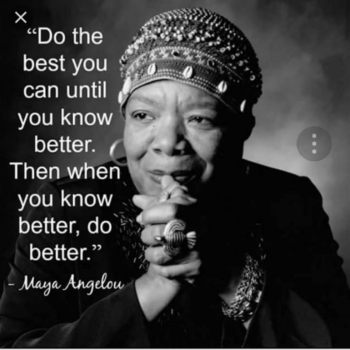
The advice changes. The experts change. Life happens—and we do the best we can in the moment, figuring it out as we go. That seems to be how it works. We learn, we stumble, we hurt each other, we grow, and sometimes—if we’re fortunate—we find our way back to one another.
Father’s Day always stirs up mixed emotions for me. It invites me to reflect on my own father, my sons as fathers, and the winding road that families sometimes travel. It also reminds me how different life looks at eighty than it did at sixteen.
My parents divorced when I was fifteen. The hurt ran deep. Dad remarried and built a life with another family. My sister and I lost the day-to-day experience of having a father in our lives. Years passed. Then decades. Like many teenagers, I was convinced I understood exactly what had happened and who was responsible. Looking back now, I realize I understood very little.
Marriage, parenting, my own divorce, disappointment, forgiveness, loss, and growing older expanded my understanding of what it means to be human. The older I became, the less interested I was in deciding who was right and who was wrong. Instead, I found myself becoming curious about the choices people make, the burdens they carry, and the limitations they are trying to navigate.
This willingness to become curious can blossom into forgiveness. I remember when I received an unexpected phone call in September 2008. Dad’s wife of forty-five years had died. He was calling to ask if he could come to California for a visit. Of course, my answer was a resounding “yes!”
Preparations for his visit began right away—especially preparing my mom. Had she reached forgiveness? After all, they had not seen each other in more than four decades. Their marriage had ended painfully. There had been years of hurt feelings, misunderstandings, and distance.
When Dad arrived, I could see he was a little scared about how Mom would react to seeing him again. I was both excited and a little apprehensive myself about their reunion. I called her to say we were home from the airport and to come on over.
I’ll never forget the moment she arrived. She opened the door, peeked in, smiled, opened her arms, and gave him a big hug. She welcomed him not as a former husband. Not as an adversary. Not as someone who owed her anything. But as an old and dear friend who had shared an important chapter of her life. They had known each other since grammar school. They had fallen in love, married young, raised children together, and shared nearly two decades of marriage before their paths diverged.
The bitterness was gone—replaced by compassion, understanding, and gratitude for what had once been. I watched and listened and saw them as the flawed and fabulous humans who brought me into the world—Mom just shy of 20 and Dad not yet 23. Barely more than children themselves.
The parents standing in my living room were no longer the wounded young couple whose divorce had shaped so much of my adolescence. They were like long lost friends—two older adults who had lived full lives, survived losses, learned difficult lessons, and somehow arrived at a place of peace.
That visit became one of the sweetest experiences of my life. We laughed. We reminisced. We created new memories. If someone had shown my sixteen-year-old self a photograph of my mother, father, sister, and me standing together smiling in 2008, as well as a photograph of my mom and dad laughing and looking with love at each other, I would have called it impossible—a family reunion that my younger self would have sworn could never happen.
I often think about what made those moments possible. Forgiveness is not about pretending hurt never happened. It is not about excusing poor decisions or rewriting history. The divorce still happened. The years of separation were real. The pain was real.
Forgiveness simply allowed us to stop carrying the weight of judgment and resentment. It allowed us to see each other as imperfect human beings doing the best they could with what they knew at the time.
The older I get, the more convinced I am that most people are not villains in their own stories. They are simply human. They make choices. Some work out well. Some don’t. Some leave scars. Some create opportunities for growth. We all have moments we would handle differently if given another chance.
This weekend, we thank and bless the fathers who somehow got it right. We celebrate the men who learned how to be nurturing, patient, present, and wise despite not having those qualities modeled for them. We honor and bless the fathers who keep showing up, who keep trying, who keep loving even when relationships become complicated.
And we bless those who are still learning. Each generation has an opportunity to grow, heal, and write a slightly different story.
Father’s Day reminds me that relationships are rarely frozen in place. They evolve. They fracture. They heal. They surprise us.
Life has taught me to be careful about declaring any relationship finished. I’ve seen many unexpected reconciliations, many softened hearts, and many second chances. The family photograph from 2008 confirms that healing sometimes arrives long after we’ve stopped expecting it.
This week our nation also observes Juneteenth—a holiday that would have been difficult to imagine for many Americans eighty years ago. Its very existence reminds us that growth is possible. Just as parents learn, adapt, and sometimes do better than the generation before them, societies can grow as well. Perhaps it is also a reminder that healing is still happening, often in ways we cannot yet see and sometimes long after we’ve stopped expecting it. There is no instruction manual for creating a more just and compassionate world. We learn as we go—one generation, one relationship, and one heart at a time.