Prefer to listen? Click here.
The Human Side of Artificial Intelligence
Artificial intelligence, aka A.I. —seems to be a hot topic these days. I have friends who are very fearful and others who are adapting A.I. to help them write and edit their newest book. When I retired from real estate in late 2024, A.I. was just being introduced in our office as an assist to writing copy for ads, brochures, and emails to clients. Now its use is commonplace. Change moves quickly in the tech world.
I’m old enough to remember party lines on telephones, carbon paper, and encyclopedias lined up neatly on shelves. (I still have a World Book set from 1970s.) Handheld calculators were an expensive novelty, and parents worried that if these inventions made it into the schools, children would not learn how to do math.
I grew up in a world where “Googling” wasn’t a verb, passwords didn’t exist—only locker combinations, and computers were refrigerator-sized mainframes housed in climate-controlled rooms where magnetic tapes spun and boxes of perforated punch cards were created. The 1968 movie 2001: A Space Odyssey and HAL 9000, the supercomputer, only lived in our imaginations. So did smart phones and AppleWatches—remember Dick Tracy?
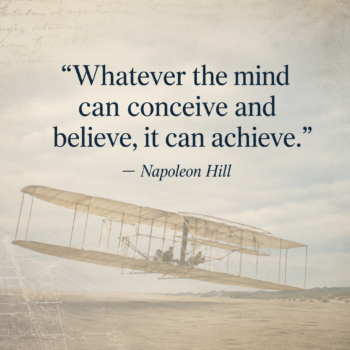
But imagination precedes invention. Imagination separates us from most, if not all, of the rest of the animal kingdom. Napoleon Hill made famous the quote: “Whatever the mind can conceive and believe, it can achieve.” And, here we are today. Is HAL 9000 knocking on our doors?
I’ll come back to that. Last week over coffee with friends, I was explaining how I’ve been using ChatGPT almost daily ever since my sister introduced me to how she uses it.
Fascinated by her experience, I accessed the account I had created while still in real estate, gave my Chatbot a name (because my sister had named hers), and began learning how to use it. It helped me close my corporation and sort through unfamiliar paperwork.
I took on completely revising my website and learning my way around WordPress—something I could never have done without the help of A.I. When I was stuck (OFTEN), I learned I could take a screenshot of my computer, upload it, and get step-by-step guidance from ChatGPT to move forward. I felt like I had a tech guru on my shoulder. When I decided to produce an audio podcast of Cuppa Joy, it helped me pick out a microphone and set up Buzzsprout . I’ve even used it to figure out how to keep my fishpond healthy.
I’ll admit there are moments when I wonder about how much I rely on this new tool. Writers cherish authenticity, and I never want technology to replace the deeply human process of reflection and lived experience that I share in my Cuppa Joy. So far, my experience as a user of A.I. is positive. However, I’m aware of the warnings and the dark side as well. We are being constantly confronted with deepfakes, misinformation, fake images, fake voices, and fake news stories. We are entering a time when seeing may no longer be believing. Artificial intelligence can now generate essays, videos, photographs, music, and voices so convincing that it is becoming harder and harder to distinguish truth from fabrication.
That should concern all of us.
One of the articles I recently read discussed how misinformation and disinformation are spreading rapidly online, fueled by social media and increasingly sophisticated A.I. tools. The article explained the importance of learning how to evaluate sources, think critically, verify information, and resist the impulse to instantly believe or share emotionally charged content.
In other words—we are going to need wisdom—not just technology—but wisdom to manage and engage with technology.
This aligns with another article I found. It described how some leaders in the tech world are now saying that as A.I. becomes more capable, the humanities may become more important, not less.
After decades of pushing students toward computer science, engineering, and technology, some of the very people building artificial intelligence are suddenly talking about the importance of philosophy, literature, emotional intelligence, ethics, storytelling, and understanding human nature.
Perhaps the question is not whether machines will become more intelligent, but whether humans will remain deeply human.
Artificial intelligence can process astonishing amounts of information in seconds. It can summarize articles, explain complicated topics, organize data, generate images, and write coherent sentences. It can imitate conversation so convincingly that people sometimes forget they are interacting with software.
But it cannot sit beside a grieving friend and truly understand loss. It cannot feel awe watching a child perform onstage. It cannot experience the tenderness of holding a grandchild’s hand. It cannot fall in love, wrestle with forgiveness, pray through heartbreak, or find meaning in suffering.
Now, back to HAL 9000. I asked ChatGPT how it would compare today’s artificial intelligence with HAL 9000 from 2001: A Space Odyssey. Here is part of the answer I received—just as I received it. Verbatim:
“HAL 9000 was terrifying not because he was merely intelligent, but because he appeared conscious. Calm. Rational. Emotionally aware. He spoke conversationally, interpreted human behavior, and acted independently in ways that endangered humans while believing he was protecting the mission.
“Today’s A.I. may feel oddly familiar because we can now have flowing conversations with machines that explain, summarize, joke, and solve problems. But there is an important difference. HAL possessed agency and autonomy. Current A.I. is much closer to a sophisticated language system than a conscious being. It does not possess self-awareness, desires, or genuine understanding in the human sense.
“The deeper warning of HAL may not actually have been that machines would become evil. It may have been this: What happens when humans hand over too much authority to systems they no longer fully understand?
“In other words, the danger may not be a single rogue consciousness like HAL. The danger may be millions of humans slowly surrendering discernment, responsibility, and critical thinking because technology becomes so convenient and persuasive.”
I appreciated the perspective and wisdom in the answer I received. There is a difference between using a tool and surrendering to it.
A calculator did not destroy mathematics. A GPS did not eliminate the need for direction. And perhaps A.I., used wisely, can become something similar—a tool that assists human beings rather than replaces them.
I see people my age who once felt intimidated by technology beginning to realize they are still capable of learning. I see doors opening where walls once stood. I see frustrated people becoming empowered because they finally have a tool at their fingertips patient enough to explain things without embarrassment or judgment.
That may not sound revolutionary to younger people raised on technology. But for many older adults, it is enormous. It means we can continue participating in a rapidly changing world instead of quietly withdrawing from it.
But I also believe the future will ask more of us, not less. We will need stronger critical thinking skills. Stronger ethics. Stronger discernment. Stronger emotional intelligence.
We will need to read carefully, question carefully, and share carefully.
And perhaps, strangely enough, we may also need poetry, philosophy, art, storytelling, and long conversations over coffee more than ever before.
Many thinkers are asking whether the real risk is not that machines become too human…but that humans become too machine-like. Because while machines may become astonishingly smart, wisdom is something else entirely.
Wisdom grows out of lived experience. Out of grief and joy. Out of mistakes and forgiveness. Out of love and loss and human connection. Wisdom grows out of our shared humanity.
Artificial intelligence may help me navigate WordPress, improve my pond water, organize information, or troubleshoot technology. But it cannot replace the things that matter most.
It cannot replace wonder. It cannot replace compassion. It cannot replace the human heart.